
By Public Health Communications • Updated May 2026
Inconsistent access to safe, stable housing leaves individuals vulnerable to physical and mental health problems. This vulnerability stems from an inability to meet basic needs and greater exposure to environmental hazards and violence. Housing insecurity is largely driven by systemic inequalities in wealth distribution, predatory capitalism, and historical racial disenfranchisement, including discriminatory lending practices.
Guided by the principle that organizing is research, Professor Irene Yen facilitated the convening of Fresno and Merced residents to discuss housing concerns. Professor Yen and her collaborators at Faith in the Valley, Fresno, and Cultiva Central Valley, applied a Local Organizing Committee model to engage local partners in sharing their experiences, perspectives, and solutions on housing instability and unaffordability. Discussions included advocacy for local development plans and policies that promote housing equity and security.
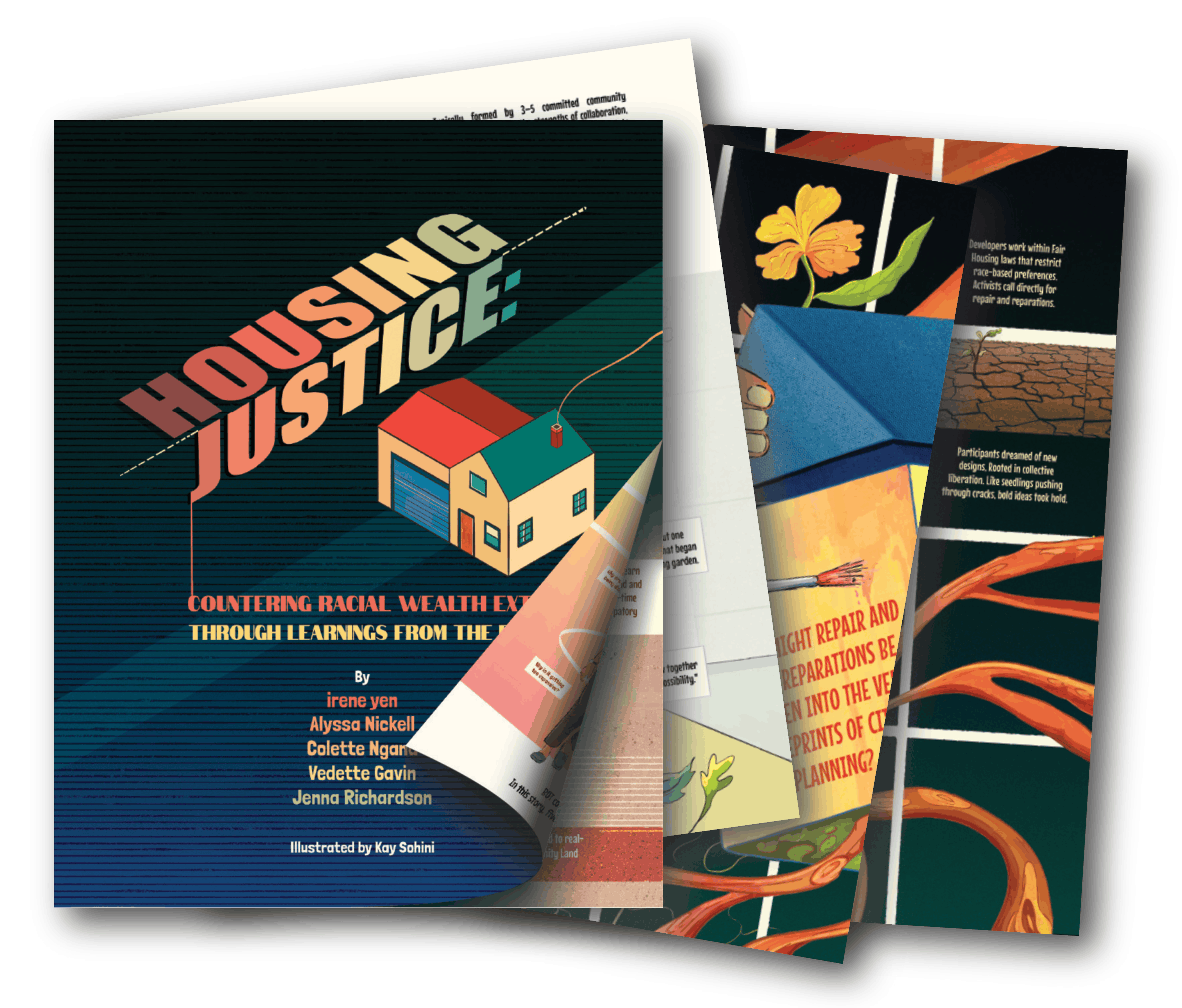
Location teams’ partnerships with local groups proved instrumental in identifying and sharing their respective learnings. Lessons learned from the project were captured in a beautifully illustrated graphic booklet that highlights that the work was driven by local experience. The booklet is available in English and Spanish.
The larger effort was coordinated by Professors Lawrence Vale and Mariana Arcaya of the Department of Urban Studies and Planning at the Massachusetts Institute of Technology, with support from a grant from the Robert Wood Johnson Foundation.
To learn more about Professor Yen’s project, please read:
Martinez, R. L., Frausto, D., Zavala-Sandoval, J., Serna, A., Corchado, C. G., Alvarado, A., Nkosi, J., & Yen, I. (2024). Community-Led Solutions: How Local Organizing Committees Drive Change for Housing and Health Equity in California’s Central Valley. Journal of Participatory Research Methods, 5(2). https://doi.org/10.35844/001c.120257
Learn more about our research: Visit the Public Health Research Page